July 24, 2026
Interoception and Sleep: Helping Neurodivergent Kids Recognize Tiredness
By Samantha Rosenberg
If your neurodivergent child insists they're "not tired" while yawning, rubbing their eyes, or bouncing off the walls at 9:30 pm, you are not being gaslit. From their perspective, that statement may be completely true. The reason often has a name most parents have never heard: interoception.
At Slumber Squad Sleep Consulting, so many of the families I work with — especially those raising ADHD and autistic kids — describe the same nightly loop: the body is clearly tired, the child swears it isn't, bedtime turns into a power struggle, and everyone ends the day frustrated. Understanding interoception can quietly change all of that.
Educational content, not medical advice. Every child is different — if sleep or sensory challenges are significantly affecting your family, please talk with your pediatrician or a qualified provider.
What interoception is
Interoception is the sense of noticing and interpreting signals from inside your body. It includes things like:
- Hunger and thirst
- Temperature — feeling hot, cold, or clammy
- Heart rate and breathing
- Muscle tension and heaviness
- The need to use the bathroom
- And — importantly for bedtime — tiredness
Most of us take these signals for granted. Our brain quietly reads them all day and nudges us to eat, drink, rest, or slow down. For many neurodivergent children, that internal signal is quieter, louder, delayed, or harder to interpret — not missing, just different.
Why it matters at bedtime
When a child cannot easily "read" the signal of tiredness, a few things tend to happen:
- They genuinely don't feel tired, even when their body looks exhausted.
- They ramp up instead of winding down — movement becomes their way of self-regulating.
- They resist bedtime because, from their point of view, it makes no sense.
- By the time the signal does land, they're overtired — which makes falling asleep even harder.
None of this is manipulation, defiance, or a discipline problem. It's a sensory difference showing up at the hardest possible time of day.
A parent mindset shift
Before we get to strategies, one gentle reframe: your child is not refusing sleep to make your evening harder. They are working with a body that speaks a quieter dialect. When we stop trying to convince them they're tired and instead help them notice what their body is doing, bedtime softens on both sides.
This isn't every neurodivergent child, and interoception isn't the whole picture. But when it fits, it fits fast.
"Are you tired?" vs. body-check prompts
One of the smallest, highest-impact changes you can make is retiring the phrase "Are you tired?" and replacing it with concrete, neutral body-check language.
| Instead of asking… | Try a body-check prompt |
|---|---|
| "Are you tired?" | "Let's check your eyes — do they feel light and open, or heavy and slow?" |
| "You must be exhausted." | "Do your legs feel bouncy or heavy right now?" |
| "It's bedtime, you need to sleep." | "Let's take three slow breaths and notice if your chest feels fast or calm." |
| "Stop bouncing around." | "Your body looks like it's still moving fast — should we try a squeeze or a slow stretch?" |
| "Why won't you settle?" | "Where in your body do you feel awake right now?" |
Five practical ways to build body awareness at bedtime
1. Use a body check instead of "Are you tired?"
"Tired" is abstract. Bodies are concrete. Try guiding your child through specific parts: "Are your eyes light or heavy? Are your legs still bouncy or slower than this morning? Is your breathing fast or slow?" You're not looking for a "right" answer — you're helping them practice noticing.
Still not sure what's going on with your little one's sleep?
Every child is different — and sometimes you need more than an article. Send Sam a short message and you'll get a personal reply within one business day, or explore our gentle sleep consulting packages.
2. Name body signals aloud for younger children
Toddlers and younger kids often can't label what they're feeling yet. You can narrate for them: "I see your eyes are getting heavy." "Your voice is getting quieter — that's a sleepy sign." "Your body is climbing up the couch a lot. Sometimes that means our body is trying to wake itself up because it's actually tired." Neutral, curious, no lecture.
3. Use a neutral 30-second body scan at the start of the routine
Right at the start of your wind-down, do a tiny body scan together. "Let's check in. Head — how does it feel? Shoulders — soft or tight? Belly — hungry, full, or just right? Legs — bouncy or heavy?" Keep it short, keep it playful, and don't grade the answers. The point is repetition, not accuracy.
4. Connect daytime activity and energy use to later rest
Neurodivergent kids often benefit from an explicit bridge between what their body did today and how it might feel tonight. "You ran a lot at the park — your legs used a lot of energy. Later they might feel heavy, and that's their way of asking for rest." You're teaching cause and effect for internal signals.
5. Avoid over-asking; observe more and narrate neutrally
Ironically, asking "Are you tired?" fifteen times can make interoception harder, not easier — it turns the question into background noise. Instead, watch quietly and narrate once or twice: "Your blinks are getting long." "You just leaned into me — that's a resting body." Less pressure, more information.
What not to do
- Don't argue with their perception. "Yes you ARE tired" rarely lands and often escalates.
- Don't use tiredness as a threat or punishment. ("You'll be so tired tomorrow!") It teaches shame, not awareness.
- Don't rely on cry-it-out or extinction methods — they don't teach interoception, and they can be especially hard on neurodivergent nervous systems.
- Don't expect fast results. Interoception grows slowly, with lots of gentle repetition.
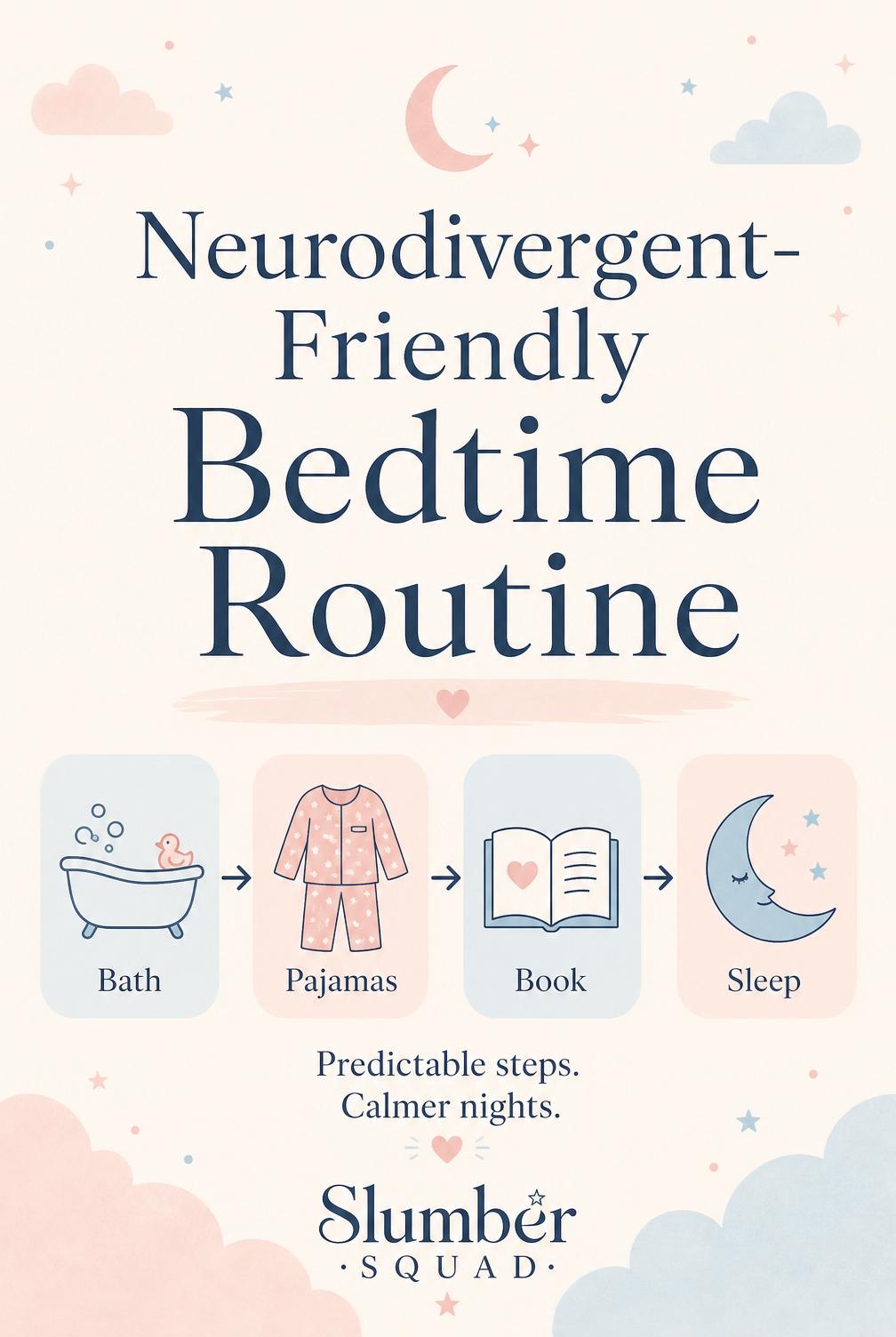
- Don't skip the basics. Predictable routine, appropriate wake windows, and a calm sensory environment still matter enormously — see our free guides for a starting point.
- Don't reach for a weighted product as a shortcut. They are not recommended for babies and the evidence in older children is limited — here is what we tell parents about weighted blankets and sleep safety.
When personalized support may help
If bedtime resistance has been going on for weeks, if your child is genuinely distressed rather than just testing, or if you've been trying gentle strategies without seeing change, a personalized plan usually moves faster than one more strategy from the internet. You can explore our gentle sleep consulting packages, or get in touch to ask a question first. Every plan is built around your specific child — sensory profile included.
Key takeaways
- Interoception is the sense that notices and interprets internal body signals, including tiredness.
- Many — not all — neurodivergent children experience interoception differently, which can make "I'm not tired" feel true.
- Replace "Are you tired?" with specific, neutral body-check prompts about eyes, legs, and breathing.
- Short body scans, narrated observations, and daytime-to-nighttime energy language build awareness gently over time.
- Skip arguing, shaming, or cry-it-out. Aim for warm, consistent, low-pressure repetition.
- If you're stuck, a personalized plan with Slumber Squad Sleep Consulting can help.
Not sure whether interoception is what's going on for your child? You don't have to figure it out alone. Send us a message and we'll talk through what you're seeing at bedtime and what might actually help.
Educational content, not medical advice. Every child is different — if sleep challenges persist or you have concerns about your child's development or health, please consult your pediatrician or a qualified provider.
Tell us about your child's sleep
If any of this sounds familiar, you don't have to keep guessing. At Slumber Squad Sleep Consulting we build personalised sleep plans around your actual child — no one-size-fits-all advice, no cry-it-out. Write to us below (or email sam@slumbersquadsleep.com), or explore our gentle sleep consulting packages.