August 9, 2026
Sleep and Pathological Demand Avoidance (PDA): What Actually Helps
By Samantha Rosenberg
Pathological Demand Avoidance (PDA) is a profile on the autism spectrum marked by an extreme avoidance of everyday demands. Bedtime is often one of the hardest times of day because it is packed with demands — even ones that feel gentle to us.
Why traditional sleep training often fails with PDA
Any approach that feels like a demand (including "it's time for bed," reward charts, or even "let's do our routine") can push the nervous system into fight, flight, or freeze. The more pressure we apply, the stronger the resistance becomes.
What works better for PDA sleep
- Reduce the sense of demand. Use collaborative, declarative language ("I wonder if we might get cozy soon") instead of commands.
- Prioritize regulation before sleep. Deep pressure, heavy work, swinging, or time with a special interest can help the nervous system settle.
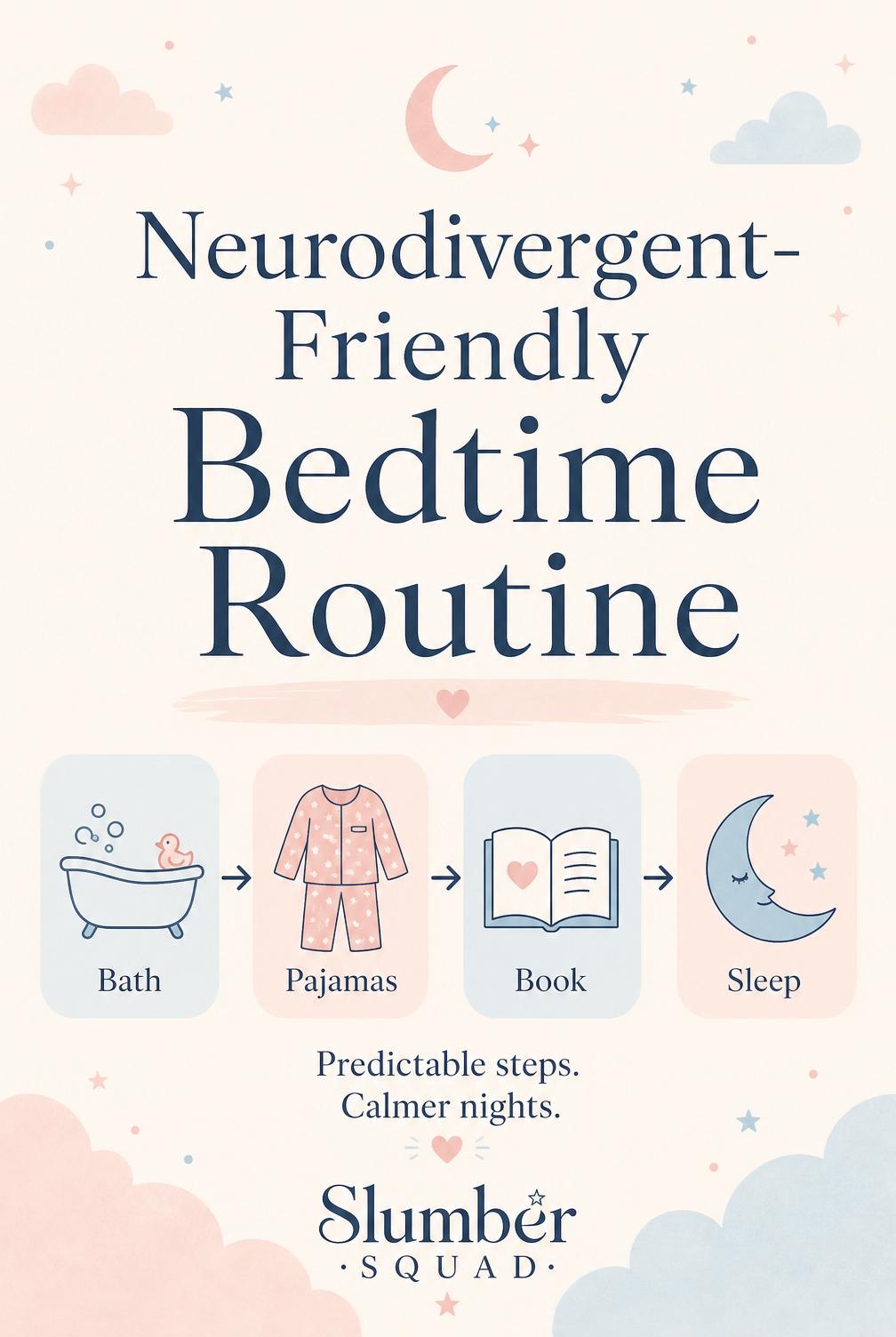
- Keep the routine highly predictable but low-demand. Same order every night, with built-in choices.
- Offer control where you safely can (pajamas, book choice, order of two steps).
- Allow a longer wind-down. Many PDA children need 45–90 minutes.
- Focus on co-regulation first. Connection and safety come before independent sleep skills.
What to avoid
- Extinction or cry-it-out approaches
- Rigid "you must stay in bed" rules without support
- Taking away preferred items as punishment
- Power struggles at bedtime
- Too many verbal demands during the wind-down
Realistic expectations
Progress is usually slower. Many PDA children need weeks or months of consistent, low-demand support before bedtime becomes easier. The goal is a nervous system that feels safe enough to sleep, not perfect compliance.
Still not sure what's going on with your little one's sleep? Every child is different — and sometimes you need more than an article. You can book a free 20-minute discovery call or explore our gentle sleep consulting packages to see how we work.
Book a Free Call →Related reading: Neurodivergent sleep support and Interoception and sleep. If bedtime demand avoidance has been stuck for weeks, a low-demand, sensory-aware sleep plan is usually the fastest way forward.
Keep reading
- The Gentle Sleep Training Guide
- Age-by-Age Sleep Expectations
- See our packages or book a free 20-minute discovery call
Educational content, not medical advice. Every child is different — if sleep challenges persist or you have concerns about your child's development or health, please consult your pediatrician or a qualified provider.
If any of this sounds familiar, you don't have to keep guessing. At Slumber Squad Sleep Consulting we build personalised sleep plans around your actual child — no one-size-fits-all advice, no cry-it-out. Explore our gentle sleep consulting packages, or book a free 20-minute discovery call and we'll help you pick the right level of support.
Book a Free Discovery Call →