September 17, 2025
Neurodivergent Sleep vs. Neurotypical Sleep: What's Different, Why It Happens & What Helps
First things first: what does "neurodivergent" mean? "Neurodivergent" is simply a way of saying that someone's brain processes the world differently than what's considered "typical." This umbrella includes things like autism, ADHD, dyslexia, Tourette's, and more. It doesn't mean something is "wrong" — it means unique wiring, with unique needs. And just like everything else, that wiring can affect sleep.
Sleep Problems Are More Common in Neurodivergent Children
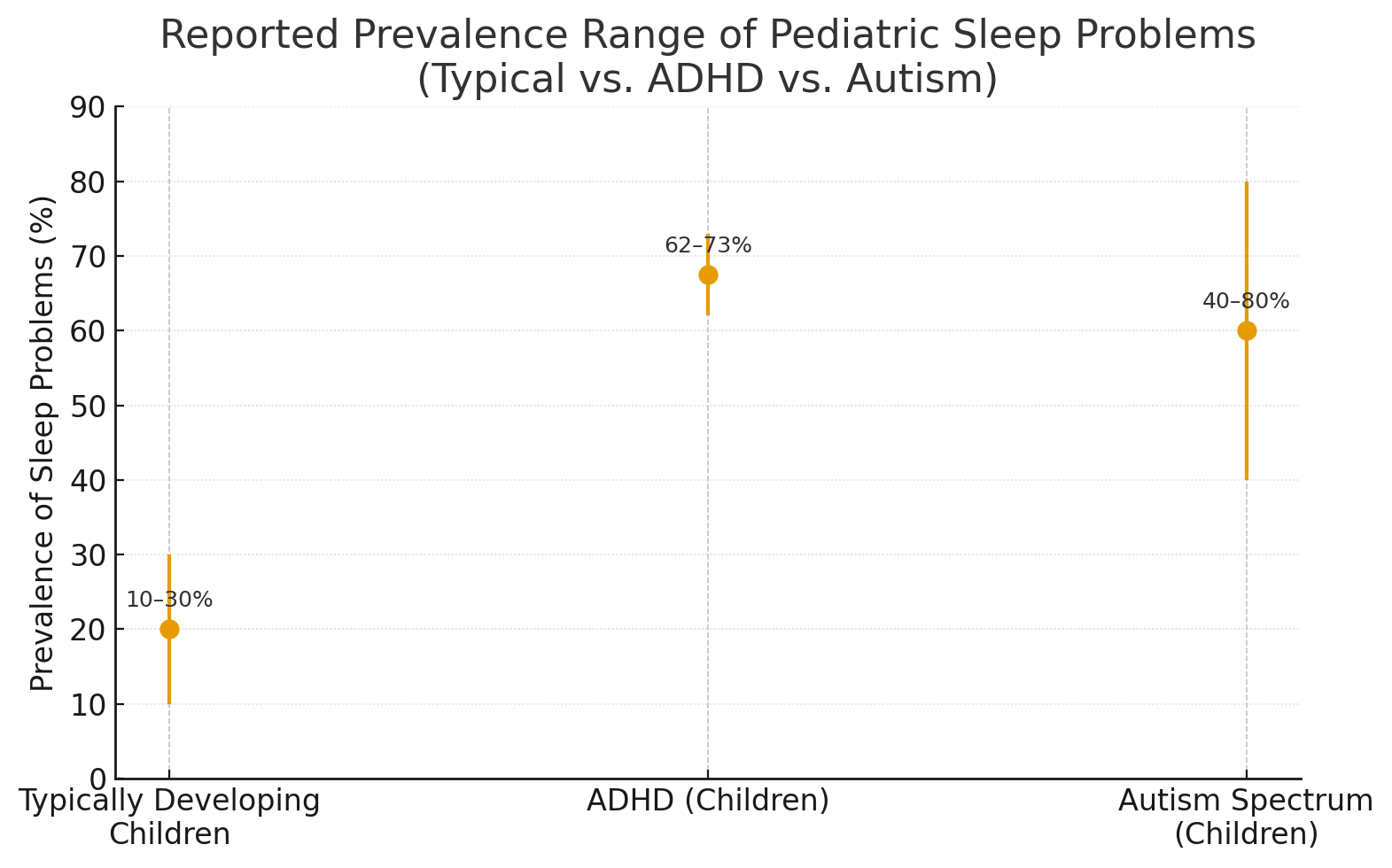
Sleep struggles happen to all kids sometimes, but they're much more common in neurodivergent kiddos:
- Autism: up to 40–80% experience challenges like short nights, long time to fall asleep, or lots of wake-ups
- ADHD: 60–70% report bedtime battles, restless nights, or hard-to-settle mornings
- Neurotypical peers: about 10–30% experience frequent sleep issues
This doesn't mean you're doing something wrong as a parent—it means your child's brain and body are simply wired differently.
Understanding Sleep Architecture Differences
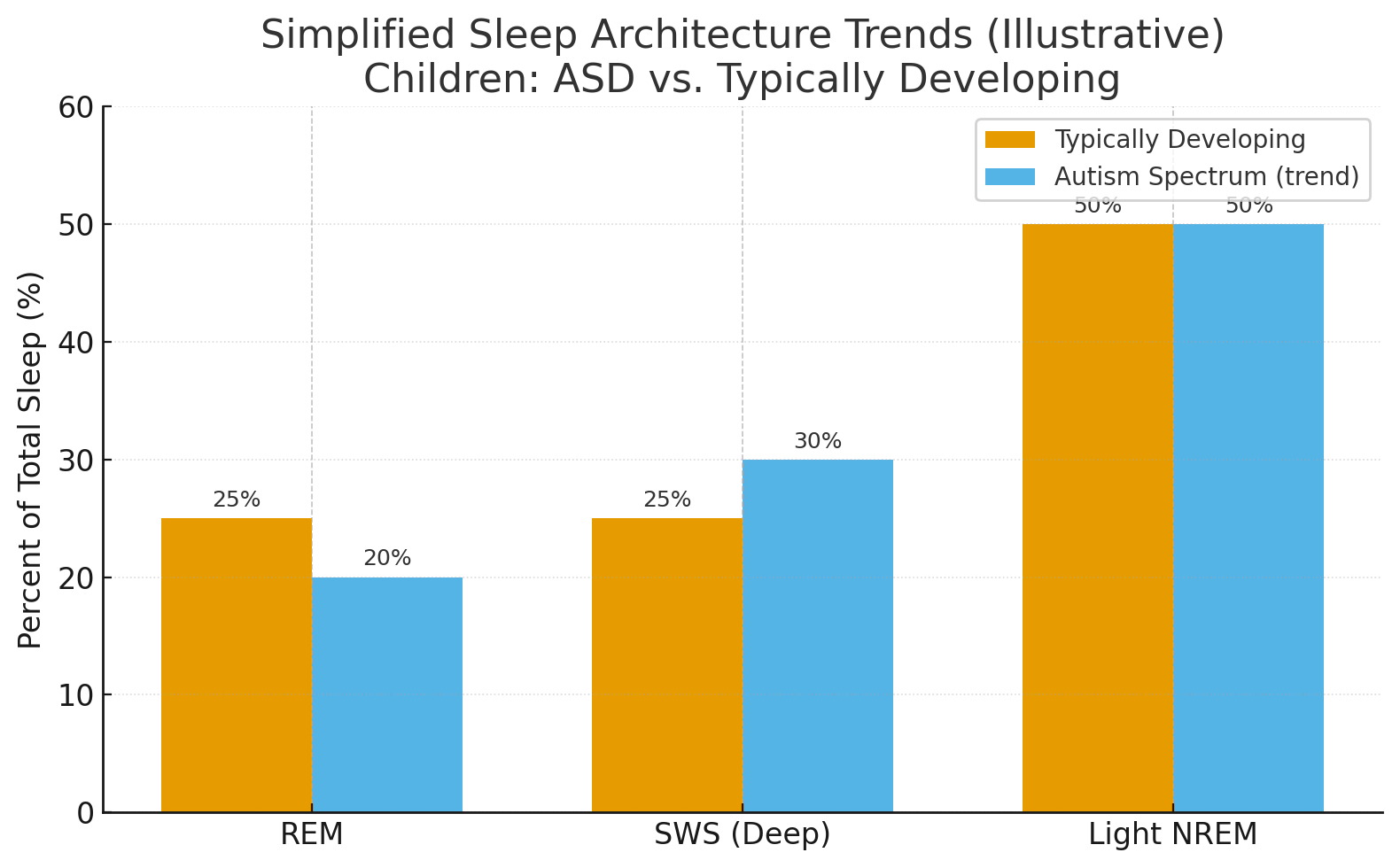
Research shows significant differences in how neurodivergent children's brains process sleep cycles compared to neurotypical children.
What's Really Going On? The Science Behind Neurodivergent Sleep
🕰 Circadian Rhythm & Melatonin
Autistic children often produce melatonin (the "sleep hormone") at different times or in lower amounts, which can delay sleep. ADHD is linked to a natural "night owl" tendency—bedtime feels too early, even when you know they need rest.
💤 Sleep Architecture (The Structure of Sleep)
Research shows autistic children may get less REM (dream sleep) and more deep sleep. This shift can mean lighter, more fragmented nights and harder transitions between sleep cycles.
🎧 Sensory Processing
Noise, light, textures, or even the feeling of pajamas can make winding down harder. When the nervous system is on high alert, staying asleep takes extra effort.
⚖ Other Factors
Anxiety, medical issues (like reflux or apnea), and the timing of ADHD medications can all add layers of difficulty.
Still not sure what's going on with your little one's sleep?
Every child is different — and sometimes you need more than an article. Send Sam a short message and you'll get a personal reply within one business day, or explore our gentle sleep consulting packages.
How This Looks in Real Life
- "It takes forever to fall asleep" → could be delayed body clock or sensory overload
- "They wake up multiple times per night" → may indicate different sleep architecture patterns
- "Mornings are a struggle" → often related to circadian rhythm differences
Evidence-Based Strategies That Actually Help
✨ Light Is Medicine
Bright outdoor light in the morning + dim lights in the evening reset the body clock. This is especially important for children with ADHD and autism who may have delayed circadian rhythms.
✨ Sensory-Smart Sleep Spaces
Create a bedroom environment that supports your child's sensory needs:
- White noise machines to mask disruptive sounds
- Blackout curtains for complete darkness
- Compression sheets or weighted blankets (if approved by your pediatrician)
- Temperature control—many neurodivergent children are sensitive to being too warm or cold
✨ Routine Over Rescue
Keep wake windows and bedtime predictable. Overtired and undertired kids both struggle with sleep. Consistency is especially crucial for neurodivergent children who thrive on routine.
✨ Melatonin with Care
For some autistic children, short-acting melatonin (always with your pediatrician's guidance) can ease sleep onset. This should be part of a comprehensive approach, not a standalone solution.
✨ ADHD-Specific Tweaks
Talk to your doctor about medication timing. Gradual bedtime shifts and evening "wind-down" rituals are your best friends for managing the natural "night owl" tendency.
The Slumber Squad Bottom Line
If your child is neurodivergent and sleep feels like a never-ending puzzle, you're not imagining it. Their unique brain wiring means sleep is more complex, but it's also not impossible.
- Autism = more night wakings, melatonin differences, and sensory sensitivities
- ADHD = delayed body clock, long time to fall asleep, and restless nights
- Neurotypical = fewer but still occasional struggles
What matters most: creating a calm environment, respecting their unique needs, and staying consistent. You don't have to do it perfectly—you just have to do it together, step by step.
✨ Sweet dreams, from all of us at Slumber Squad.
If daycare or preschool naps are pushing bedtime later instead, see Preschool Naps Are Pushing Bedtime Late.
Tell us about your child's sleep
If any of this sounds familiar, you don't have to keep guessing. At Slumber Squad Sleep Consulting we build personalised sleep plans around your actual child — no one-size-fits-all advice, no cry-it-out. Write to us below (or email sam@slumbersquadsleep.com), or explore our gentle sleep consulting packages.