January 9, 2026
Overtired vs. Undertired: Why They Look the Same (and How to Tell)
By Slumber Squad Sleep Consulting
It's 7:30 PM. You've done the bath, read the books, and dimmed the lights. You put your little one down, expecting a peaceful drift off to dreamland.
Instead, chaos erupts.
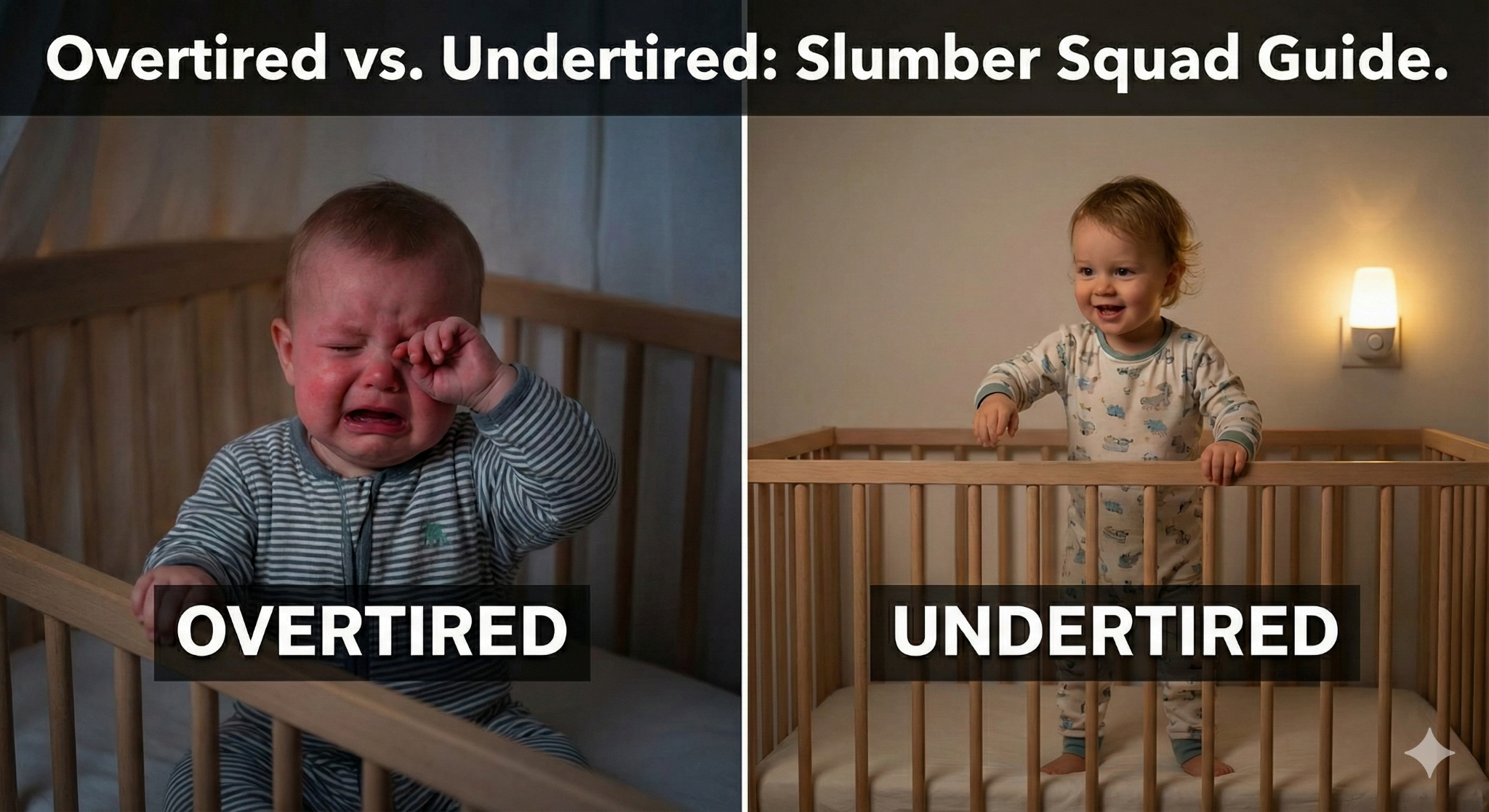
Maybe it's hysterical crying and back-arching. Maybe it's crib gymnastics, babbling, and a sudden desire to practice standing for an hour.
As a parent, you're baffled. They seem exhausted. Their eyes are red, they are cranky, and it's past their usual bedtime. Yet, they are fighting sleep with every ounce of their tiny being.
Welcome to the great sleep paradox: The confusing battleground of overtired vs. undertired.
At Slumber Squad, this is one of the most common questions we get. Why do an exhausted baby and a not-quite-tired-enough toddler look almost exactly the same? And more importantly, how do you fix it?
Let's decode the signals so you can stop guessing and start sleeping.
The "Second Wind": Why They Look So Similar
The reason an overtired baby and an undertired baby often present the same behaviors—hyperactivity, resistance to bedtime, and fussiness—comes down to biology.
When a child is undertired, they simply haven't built up enough "sleep pressure" (adenosine) during their wake window to feel sleepy. They have genuine energy left to burn.
When a child is overtired, their body has gone past the natural window for sleep. To keep them awake, their brain triggers a fight-or-flight response, flooding their system with stimulating hormones like cortisol and adrenaline.
In short: An overtired child is running on stress hormones that look a lot like energy. This artificial "second wind" makes them feel wired, irritable, and incredibly difficult to soothe.
Deep Dive: The Signs of an Overtired Baby or Toddler
Overtiredness is the most common culprit for bedtime battles and early morning wake-ups. It happens when a child stays awake too long between naps or has had poor day sleep overall.
You've missed the "sweet spot," and now they are in the "crash zone."
Key Overtired Signals:
- Intense Fussiness: Zero patience, easily frustrated with toys, and "clingy" behavior.
- Physical Cues (The Classics): Eye rubbing, ear pulling, yawning repeatedly before the bedtime routine starts.
- The "Wired and Tired" Burst: A sudden burst of hyperactive, clumsy energy right before bed. Think running in circles or manic laughter that quickly turns to tears.
- Fighting Sleep Hard: Arching their back, screaming when put in the crib, and needing excessive soothing to settle down.
- Short Naps & Early Rising: Waking up after 30-45 minutes crying (see our guide on wake windows and short naps), or waking for the day at 5:00 AM.
Deep Dive: The Signs of an Undertired Baby or Toddler
Undertiredness is increasingly common as babies transition to toddlerhood and their sleep needs change rapidly. This happens when wake windows are too short, naps are too long, or they haven't had enough physical activity during the day.
They are in the crib, but their battery is still at 40%.
Still not sure what's going on with your little one's sleep?
Every child is different — and sometimes you need more than an article. Send Sam a short message and you'll get a personal reply within one business day, or explore our gentle sleep consulting packages.
Key Undertired Signals:
- Happy in the Crib: They aren't necessarily upset when put down, but they are awake. They might babble, play with their sleep sack, or practice new skills (rolling, standing) for 30–60 minutes before falling asleep.
- Toddler Stall Tactics: "One more water," "I need to go potty," "Where is my other dinosaur?" These tactical delays often mean they just aren't sleepy yet.
- Split Nights: This is a major red flag. The child sleeps well for the first half of the night but wakes up at 2:00 AM wide awake and wants to party for an hour or two before going back to sleep.
- Resisting Naps: Fighting nap time fiercely, but generally being in a good mood during the day.
The Slumber Squad Cheat Sheet: Overtired vs. Undertired
| Feature | Overtired Signs (Too Late!) | Undertired Signs (Not Ready!) |
|---|---|---|
| Mood at Bedtime | Irritable, crying, hysterical, "wired." | Playful, chatty, resistant but not necessarily sad. |
| Behavior in Crib | Arching back, intense crying, frantic. | Babbling, crib gymnastics, playing peacefully. |
| Time to Fall Asleep | Takes a long time due to crying/fussing. | Takes a long time due to playing/talking. |
| Night Wakings | Wakes crying early in the night; often wakes very early in the morning (4/5 AM). | "Split nights" (long periods of being awake and happy in the middle of the night). |
| The Cause | Wake window was too long; missed sleepy cues. | Wake window was too short; too much day sleep. |
How to Fix It: Actionable Solutions
Once you know the cause, the solution becomes clearer.
The Fix for the Overtired Child
The goal is to reduce cortisol levels and catch them before the crash.
- Shrink the Wake Window: Tomorrow, put them down 15–20 minutes earlier than you did today.
- Watch Like a Hawk: Ignore the clock and watch for early sleep cues (zoning out, slight redness around eyebrows). Start the routine immediately when you see them.
- Emergency Early Bedtime: If naps were terrible today, do not push to their normal bedtime. An unscheduled 6:30 PM bedtime can reset an overtired baby and prevent a rough night.
- Extend the Soothing Routine: Spend extra time winding down in the dark room to help them overcome the adrenaline rush.
The Fix for the Undertired Child
The goal is to build up enough sleep pressure so they are physically tired at bedtime.
- Stretch Wake Windows: Gradually increase their awake time by 15 minutes every few days. Push bedtime later or shorten the last nap of the day.
- Cap Day Sleep: If your toddler is having split nights, you may need to wake them up from their naps earlier. (We know, waking a sleeping baby feels wrong, but it protects nighttime sleep!)
- Increase Physical Activity: A toddler who sat in a stroller all afternoon won't sleep well. They need heavy work—running, climbing, jumping—to burn off energy before the evening wind-down.
The Importance of Wake Windows
Whether overtired or undertired, the root cause is almost always mismanaged wake windows.
Wake windows are the optimal periods of time your child can happily stay awake between sleeps. These change rapidly in the first two years of life. Staying on top of age-appropriate wake windows is your best defense against bedtime battles. For more on reading your child's signals, see our post on decoding sleep cues vs. wake windows.
Still Struggling to Decode the Signs?
If you feel like you're constantly swinging between an overtired mess and an undertired party animal, you aren't alone. Baby sleep is a moving target.
Sometimes you need an expert set of eyes to look at your child's unique schedule and temperament. The Slumber Squad is here to help you find that perfect balance so everyone in the house can get the rest they deserve.
Tell us about your child's sleep
If any of this sounds familiar, you don't have to keep guessing. At Slumber Squad Sleep Consulting we build personalised sleep plans around your actual child — no one-size-fits-all advice, no cry-it-out. Write to us below (or email sam@slumbersquadsleep.com), or explore our gentle sleep consulting packages.